
 020 8909 0736
 Login
Login

Bridging Loans for Sustainable Property Development
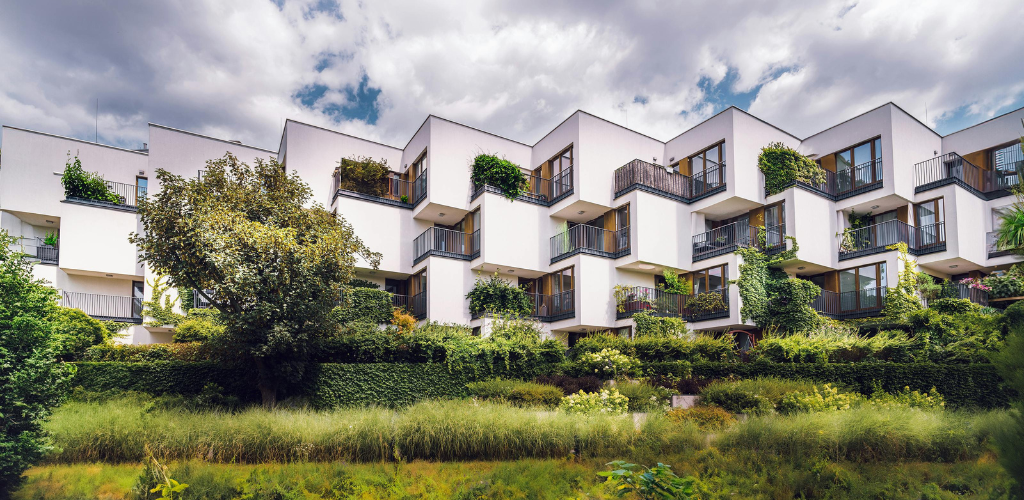

The property market is experiencing a shift toward sustainability and environmentally friendly housing, driven primarily by tightening Energy Performance Certificate (EPC) regulations and changing tenant demands. Under the government’s Warm Homes Plan, private landlords in England and Wales face a deadline of 1 October 2030 to bring all rental properties up to a minimum EPC rating of C. This means that for property developers and investors, incorporating green initiatives into a property portfolio is no longer a choice but a necessity to protect asset value.
However, the upfront costs and tight timeframes of eco-friendly conversions can often conflict with the slow processing speeds of traditional banks. Understanding how bridging finance can act as a strategic tool to ensure your properties align with sustainability targets and improve rental yields is essential for modern project planning.
The financial challenges of sustainable development
If you’re looking to begin converting existing properties within your portfolio or planning to purchase auction properties to refurbish, having sustainable development as part of your project planning can introduce financial pressures that differ from standard refurbishments.
Firstly, green materials, low-carbon heating systems, and modern insulation all require initial upfront capital. Secondly, sustainable refurbishment projects often rely on using specialist contractors, meaning delays in securing funds can disrupt construction timelines and increase your overall costs.
Equally, traditional lenders usually require proof of a completed, income-generating asset before they will offer favourable green mortgage rates. This is because high-street banks are inherently risk-averse, and they rarely provide the immediate capital needed to fund the high-cost initial phase of a sustainable refurbishment.
How bridging finance acts as a structural mechanism
When considering refurbishing your current portfolio or bringing sustainable initiatives into your project planning, bridging finance can help remove the unnecessary complication in sourcing finance to fund these projects.
This means that instead of focusing heavily on your current income or the current condition of the property, our in-house underwriters can assess the project based on the asset value and your proposed exit strategy.
This structure provides advantages for sustainable property projects:
- Speed of acquisition: If you find an undervalued property with retrofitting potential at auction or via a time-sensitive sale, you can use a bridging loan to secure the site within days, rather than the months of waiting that come from standard commercial lenders.
- Funding the upgrade works: Utilising the initial capital to complete the sustainability and environmental refurbishments, such as installing solar panels, heat pumps, and new double-glazing, can effectively grow the resale value of the property.
- Bridge-to-let transition: Using a bridging loan to fund the necessary works to pull a property out of a failing F or G band up to a compliant C rating (or a premium A or B rating) allows you to seamlessly transition the asset onto a competitive long-term green mortgage option.
Aligning your goals with your exit strategy
A bridging loan is a temporary funding solution, which means its success relies entirely on a clear and viable exit strategy. Because energy-efficient properties are highly sought after in the current market, they benefit from enhanced market liquidity, paving the way for a smooth exit.
You can structure your exit in two main ways, depending on your business model. If your goal is to increase your capital gains, you can sell the completed, refurbished property on the open market, as buyers will be potentially more willing to pay the higher asking price to avoid doing the refurbishment work themselves.
Alternatively, if you intend to hold on to the asset, you can refinance into a long-term buy-to-let or commercial mortgage. Because the property meets environmental standards, traditional lenders will view it as a lower risk, which allows you to secure competitive rates and extract your initial capital.
How KSEYE can support your move to sustainable property development
At KSEYE, we provide bridging loans that can help you fund the necessary sustainable refurbishments to your property developments and current portfolio that drive up your ROIs effectively. Because our underwriting team is fully in-house, we’re able to efficiently evaluate your exit strategy and proposals, allowing us to deliver underwritten indicative terms within hours.
If you’re looking to upgrade your properties so they align with the government’s environmental targets and increase your potential income, speak to our BDMs today.